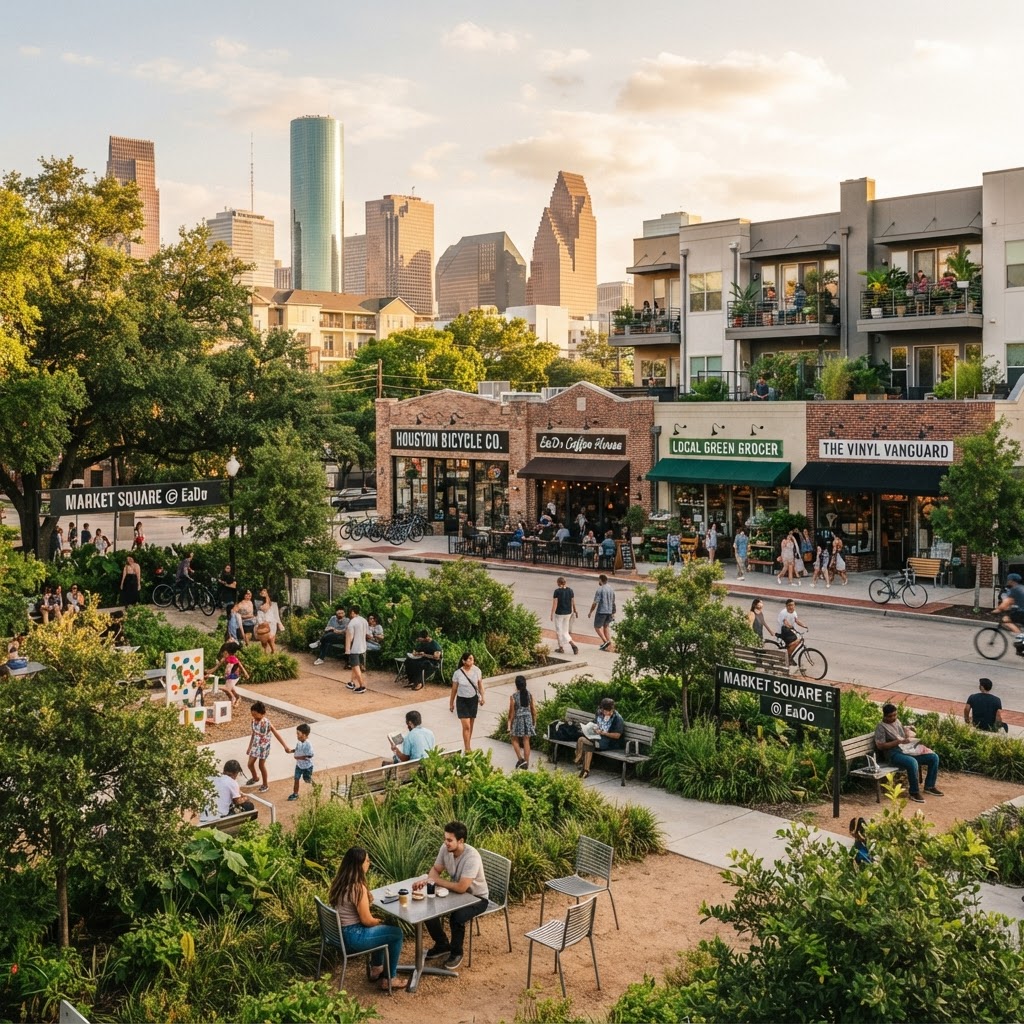
While many Houston market reports focus on broad citywide trends, savvy investors are finding exceptional value by examining the nuances of industrial adaptive reuse in neighborhoods like the Near Northside. This area presents a fascinating case study for 2027 where old warehouse structures are being transformed into boutique residential and creative office spaces. As a broker associate with Realty of America, I track these conversions closely because they signal a long term shift in neighborhood value that traditional square footage metrics fail to capture. When investors look for the next wave of appreciation, they should shift their attention toward these commercial to residential transitions. By analyzing the structural integrity of older buildings in the Near Northside, one can identify properties that offer substantial upside compared to the saturated inventory in more established districts. The strategy here involves assessing the conversion potential of historic shells that allow for contemporary living spaces while retaining original brick and timber elements. This aesthetic is highly sought after by young professionals who want the connection to Houston history without sacrificing the convenience of modern infrastructure. Connectivity remains the most critical metric for any buyer. In the Near Northside, current infrastructure improvements are prioritizing bike lanes and pedestrian access to nearby light rail stops. Investors who acquire property within a 5 to 10 minute walk of these transit nodes are effectively insulating their portfolio against market volatility. Data from our internal records at Realty of America suggests that properties within this distance see a consistent premium in both rental yield and tenant retention. I often advise my clients to look past the general price per square foot and instead weight the accessibility of daily needs. When professional offices, grocery options, and transit are consolidated within a short walk, the property becomes a high utility asset that attracts long term residents. This is fundamentally different from the sprawl seen in the far reaching suburbs where reliance on automobiles dictates the lifestyle. Beyond the physical structure, keep a close watch on commercial zoning applications. When a specialized firm or a high quality service provider moves into a former industrial site, it acts as a leading indicator for residential demand. Historically, these commercial commitments precede residential appreciation by 18 to 24 months. By the time a neighborhood feels fully revitalized to the general public, the most significant equity gains have already been realized by those who acted during the initial conversion phase. Another layer of this investment approach involves the technical modernization of historic structures. It is not enough to simply preserve the facade. The long term winners in the 2027 market are buildings that have been retrofitted with advanced climate control systems and smart utility management. These upgrades directly impact operating costs and therefore directly influence net operating income for investors. When evaluating these assets, I conduct thorough inspections to ensure that the core plumbing and electrical systems align with 2027 efficiency standards. This level of due diligence is essential for wealth preservation. Furthermore, municipal investment in shared mobility solutions is accelerating the revitalization of these overlooked nodes. As the city continues to fund pedestrian streetscape projects, the walkability score of these specific streets will increase, creating a ripple effect on property values. Savvy investors are now weighting these specific connectivity metrics much higher than traditional property features. By analyzing current development pipelines, we can identify zones that are poised for the next phase of growth. This methodology is the foundation for modern wealth preservation in a shifting economic landscape. When you are evaluating an acquisition here, consider the building fabric carefully. Projects that maintain the original soul of the neighborhood while updating core infrastructure are the gold standard for long term investment stability. My approach is to look past the general market noise and focus on the daily flow, access, and usage rates of specific nodes. This provides a clear roadmap for identifying properties that offer both protection and upside. For those looking to enter the market or refine their portfolio, the current environment offers a rare window of opportunity. By moving beyond the broad strokes of general market reports, we can secure assets that offer resilience and significant potential. The key is to act with discipline, focusing on the intersection of historical character and modern utility. It is about understanding the flow of people, the access to transit, and the usage of commercial space. This is how you build a resilient, high performing Houston portfolio. By Nick Chambers, Broker Associate, Realty Of America (ROA) · Realty of America. If you are ready to explore investment opportunities in Houston that leverage these emerging trends, contact me today to schedule a portfolio consultation.
Explore More from Nick Chambers, Broker Associate, Realty Of America (ROA)
Houston Home Selling Strategy
Strategic pricing & net-proceeds analysis
Learn moreHouston Buyer Representation
Off-market access & expert negotiation
Learn moreHouston Investment Properties
Cap rate analysis & portfolio roadmapping
Learn moreHouston Relocation Services
Corporate, medical & executive moves
Learn moreChambers Institute Classes
CE courses & buyer/seller workshops
Learn moreRelated Articles
Houston's Transit-Oriented Neighborhoods: A 2027 Investment Guide
Explore how Houston transit corridors are redefining property values in 2027 and learn why transit connected neighborhoods offer the most stable growth for investors.
Read article
Houston’s Hidden Gems: 2027 Top Neighborhoods for Capital Growth
Discover how decentralized service hubs and transit connectivity are driving capital growth in Houston. A 2027 guide for strategic real estate investors.
Read article
Houston’s Micro-Neighborhoods: The 2027 Shift in Urban Living
Discover the shift toward precision micro nodes in the 2027 Houston market. Learn how infrastructure and lifestyle density drive long term property value and equity.
Read article