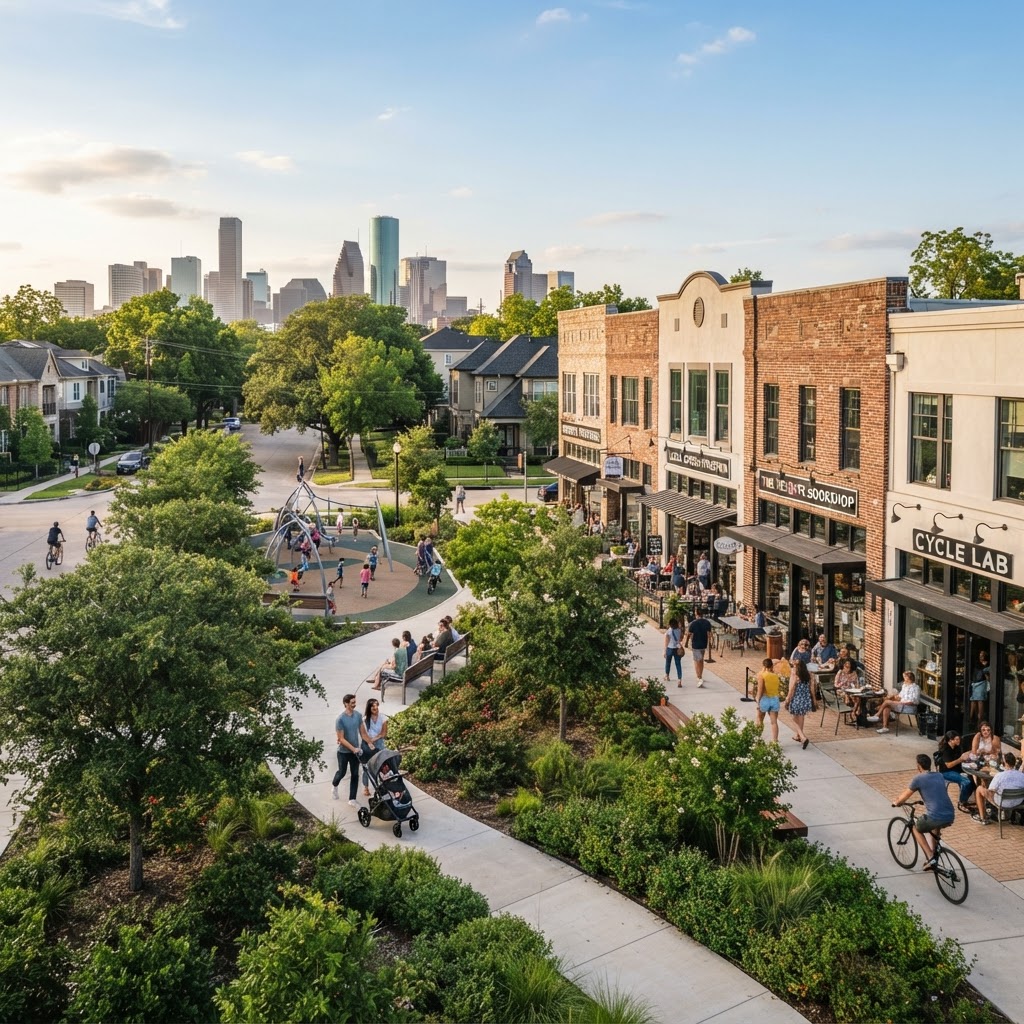
The Houston residential landscape has moved beyond the traditional zip code analysis that defined the past decade of real estate growth. Investors who want to thrive in 2027 must understand that value is now trapped in the nuanced interactions between infrastructure investment, employment hubs, and residential utility. As we look at the coming years, successful portfolios are built on specific corridor dynamics rather than citywide averages. At Realty of America, we have observed a shift where municipal planning and private capital converge to create high performance nodes. This guide focuses on the specific mechanisms driving these pockets of opportunity, moving beyond traditional metrics to look at the intersection of lifestyle and logistics. When we examine areas like the Medical Center, we see a shift where land usage is being reconfigured to support a growing demographic that prioritizes proximity to essential employment hubs. The primary driver here is the conversion of industrial or underutilized warehousing into residential density. This process creates a ripple effect, increasing demand for neighborhood amenities and driving long term value. Research centers and large corporate campuses provide a base level of housing demand that remains steady even during broader market cycles. Investors who understand the municipal pipeline can often anticipate these valuation jumps before they reflect in the common indices. Our analysis shows that properties situated within reach of these major work hubs often command a premium of 6 to 8% above the city average. Furthermore, the push for walkability has changed how modern residents value their location. Properties that allow for a lifestyle where transit, work, and social activities are within a short distance now see a price premium of 12% compared to more isolated suburban tracks. This behavioral shift mandates a rethink of how we construct residential portfolios. By focusing on these emerging corridors, investors can effectively reduce exposure to market volatility while capturing sustained equity growth. The rise of decentralized work environments has transformed satellite office hubs into anchor points for real estate value. Residential units within walking distance of these nodes are currently experiencing a surge in demand ranging from 10 to 15%. This trend is further amplified in zones where smart city infrastructure is integrated into the residential planning phase. To capitalize on these changes, investors should synthesize employment forecasts with city planning timelines. We recommend concentrating on neighborhoods where residential density is on the rise while the professional work infrastructure is already well established. This combination provides a necessary safety net for sustained occupancy demand. Our proprietary data suggests that these specific micro markets act as an effective hedge against the fluctuations often seen in larger, undifferentiated districts. By identifying these pockets early, investors build a foundation for yield improvements that persist well into the future. Our analytical tools allow us to monitor absorption rates within these sectors with high precision. We prioritize locations that offer immediate integration between professional, transit, and lifestyle requirements. This is the new standard for residential value. As we examine the future of these regions, the combination of physical connectivity and technical integration remains the main differentiator for asset quality. Investors looking to move beyond aggregate data should concentrate their efforts on these specialized sectors. For more insights on regional planning, check out our resources on transit oriented investing or our latest analysis on portfolio strategy for 2027. Reach out for a private consultation to discuss which specific micro markets align with your wealth goals. By Nick Chambers, Broker Associate, Nick Chambers, Broker Associate, Realty Of America (ROA) · Realty of America. Ready to identify the next high growth micro market in Houston? Contact Nick Chambers at Realty Of America today to discuss your 2027 real estate goals.
Explore More from Nick Chambers, Broker Associate, Realty Of America (ROA)
Houston Home Selling Strategy
Strategic pricing & net-proceeds analysis
Learn moreHouston Buyer Representation
Off-market access & expert negotiation
Learn moreHouston Investment Properties
Cap rate analysis & portfolio roadmapping
Learn moreHouston Relocation Services
Corporate, medical & executive moves
Learn moreChambers Institute Classes
CE courses & buyer/seller workshops
Learn moreRelated Articles
Hidden Gems: Top Houston Neighborhoods for Commuter Efficiency 2026
Discover how to identify high-growth Houston neighborhoods by analyzing long-term infrastructure trends, transit connectivity, and regional logistics for superior equity outcomes.
Read article
Hidden Gems: Houston’s Emerging Inner-Loop Neighborhoods in 2027
Discover the 2027 outlook for Houston neighborhoods that prioritize urban connectivity and long term property growth over traditional suburban sprawl models.
Read article
Hidden Gems of Houston: Emerging Suburbs to Watch in Late 2027
Explore the rise of Houston's emerging suburban growth corridors and how infrastructure and lifestyle design are creating new long term investment opportunities for 2027.
Read article